 English
 Polski
 Germany
 LATAM
LATAM Bulgaria
 Estonia
 France
 Hungary
 India
India Italy
Italy Kazakhstan
 Romania
 Czech Republic
 Ukraine
 United Arab Emirates
 Latvia
 Lithuania
 United States of America
 eShop
eShop  Turkey


VENTUS Air Handling Unit for a Historic Hotel in Budapest, HU
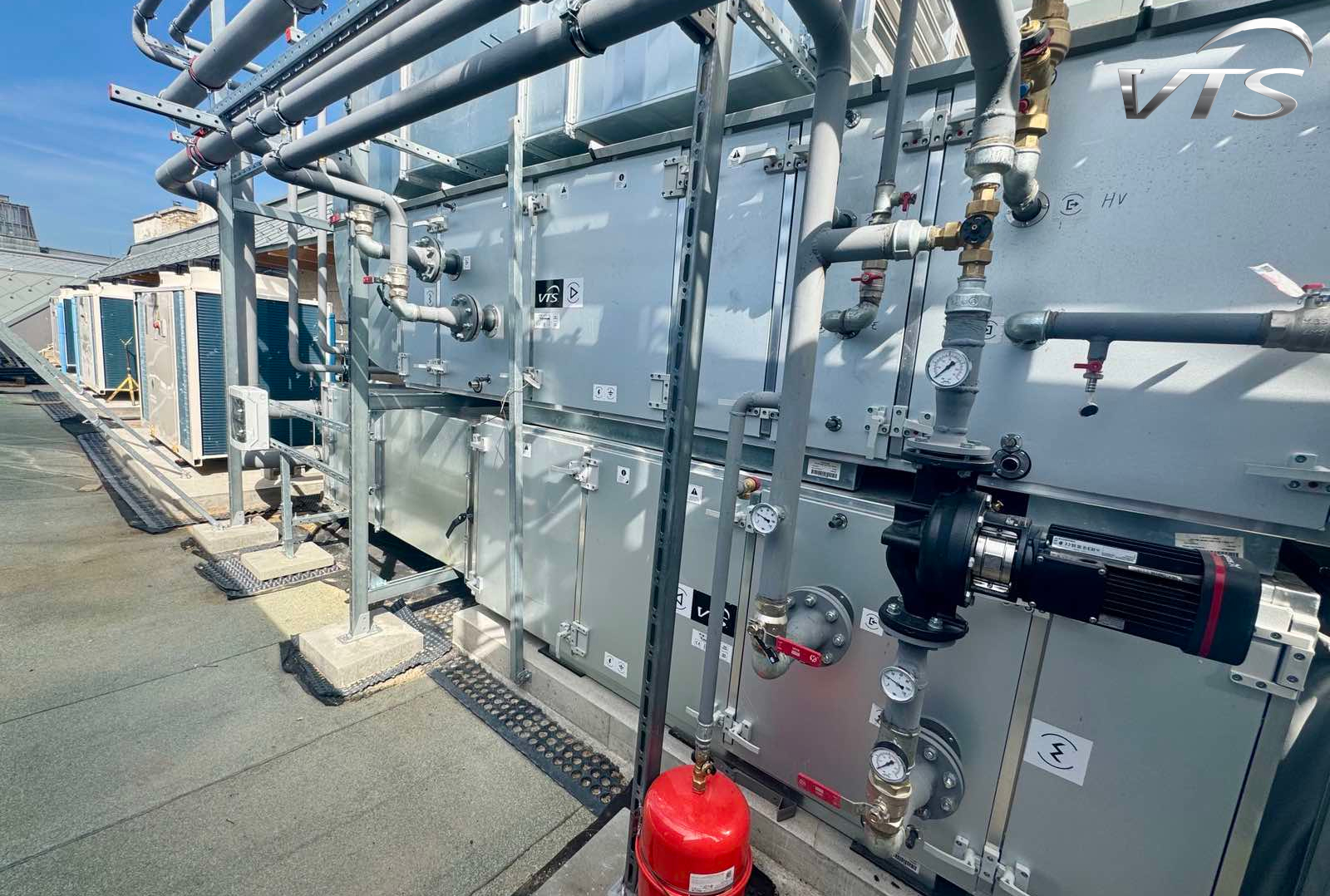
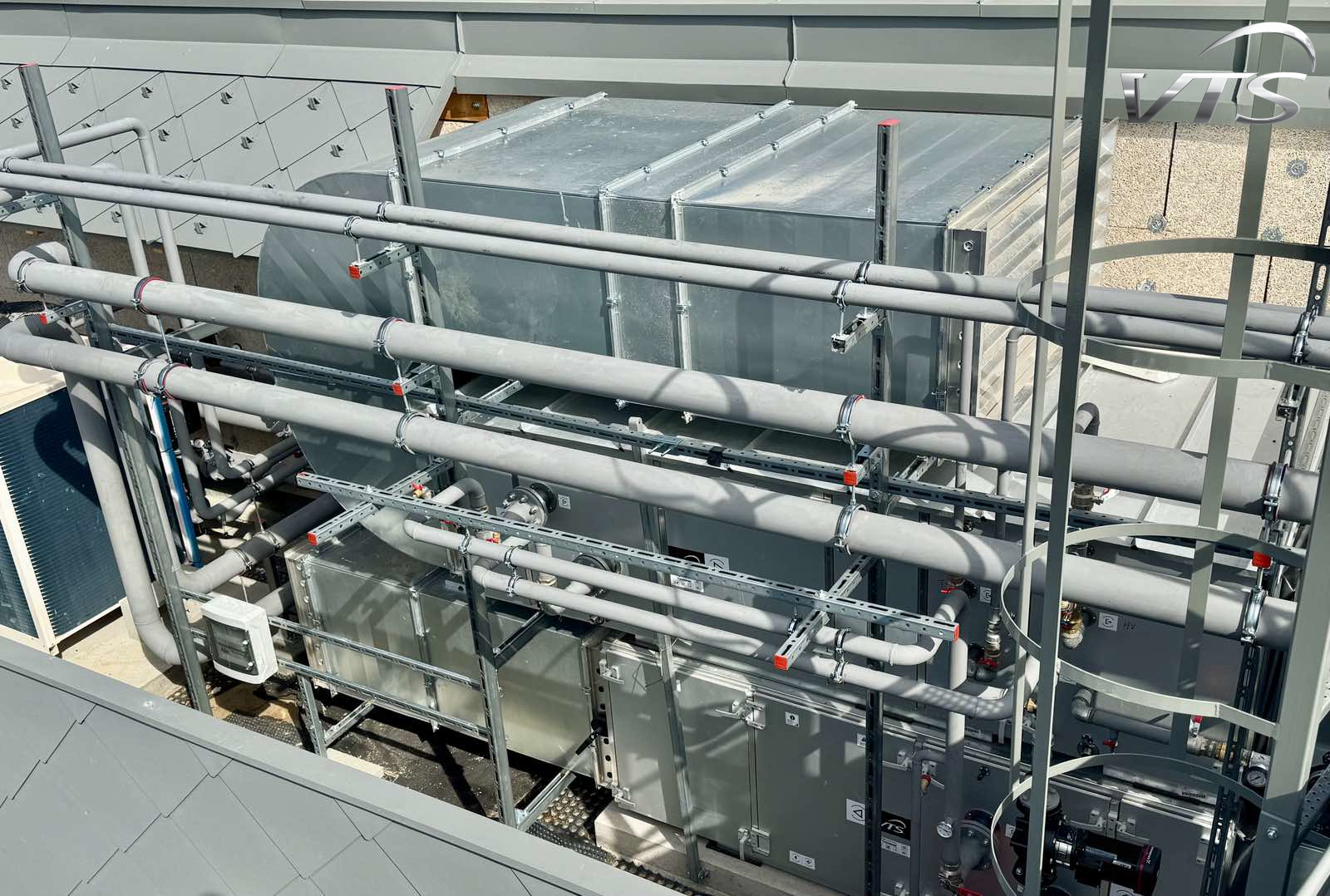
In a technical case study, we often look for an exceptional challenge, an unexpected turn of events or a distinctive engineering solution. In the Kígyó Street hotel development, however, the value of the story lies elsewhere: in the transformation of a city-centre building more than 160 years old, whose modern ventilation is provided by a VTS VENTUS modular air handling unit with an airflow capacity of 10,000 m³/h.
When reporting on an impressive reference
project, we almost automatically look for the story: what was the greatest
challenge, what unexpected problem had to be solved, and where was a special
technical intervention required?
For this project, the answer was surprisingly
brief:
- the unit was specified in the design;
- VTS delivered it;
- it was installed.
At first, this may seem like a project with no
story to tell. But there is a story—and the building itself provides it.
A new role for a building dating back to
1862
Located at the corner of Kígyó Street and Váci
Street, the building originally known as the Várady House was built in 1862.
Following a long period of vacancy, the building of heritage significance is
being redeveloped into a four-star hotel with 100 rooms.
Behind the historic façade, a seven-storey
hotel covering approximately 4,400 square metres is being developed, or has
already been completed, with a glass-roofed atrium, new rooftop floors and
modern building services infrastructure.
In a city-centre refurbishment of this kind,
the building services must accommodate the existing building’s characteristics,
the available space and the requirements of hotel operations, while also
meeting energy efficiency and operational expectations.
For this project, VTS Hungary supplied a
VENTUS VVS modular air handling unit with an airflow capacity of 10,000 m³/h
and a run-around coil heat recovery system.
A solution configured for the building
One of the key features of VENTUS VVS is its
modular design. The unit is not limited to a fixed, predefined arrangement: its
individual functions and technical parameters can be tailored to the
ventilation system of the particular building.
The air handling unit can be configured with
several heat recovery options:
- a rotary heat exchanger;
- a counterflow hexagonal plate heat exchanger;
- a crossflow plate heat exchanger;
- a glycol-based run-around coil system.
The choice of technology depends on factors
including energy performance targets, the available space for building services
equipment, and the requirements for separating the supply and extract air
streams.
The maximum heat recovery efficiency of the
VENTUS VVS range can reach 92%. This maximum does not apply to every unit
configuration. The actual value is always determined by the specific unit’s
configuration and selection data. The Kígyó Street system operates at an
efficiency of 74%.
Energy-efficient operation with monitoring
and control
The advanced automation of VENTUS VVS air
handling units can support energy-efficient operation based on measured air
quality parameters. The control system is built around a uPC3 controller, while
the factory-provided visualisation and remote HMI interface enable the unit’s
operation to be monitored and controlled.
Energy-efficient EC motors with an IE4
efficiency rating are also available for VENTUS VVS units with airflow
capacities of up to 3,000 m³/h.
Technical design is supported by the ClimaCAD
Online selection software. In addition to technical documentation for the
selected configuration, the software can generate Revit objects and 2D and 3D
DWG files. This makes it easier to integrate the air handling unit accurately
into the building’s design and BIM workflows.
A durable casing and easier maintenance
The unit’s casing consists of
polyurethane-insulated sheet metal panels with an AZ150 Aluzinc coating and an
internal metal profile structure. The rigid, weather-resistant casing, thermal
breaks and inspection doors with labyrinth seals help ensure adequate
airtightness and reduce the risk of condensation.
A separate roof system is available for
outdoor installation, while the design of the module connections provides
enhanced airtightness.
The air handling units can be fitted with
various pre-filters and final filters. The guide-rail filter arrangement allows
faster, simpler replacement. As a general recommendation, two to four filter
changes per year may be appropriate. However, the actual frequency must always
be determined by the dust load in the surrounding environment, the unit’s
operating hours and the differential pressure measured across the filters.
When smooth delivery is what creates value
The Kígyó Street project required no dramatic
crisis management or last-minute technical intervention. The appropriate unit
was designed, selected, delivered on time and installed.
In a well-prepared development, this is
precisely the supplier’s role.
The value of VENTUS VVS lies in its ability,
when configured to the building’s requirements, to support the hotel’s
ventilation through energy-efficient operation that can be monitored and
controlled.